
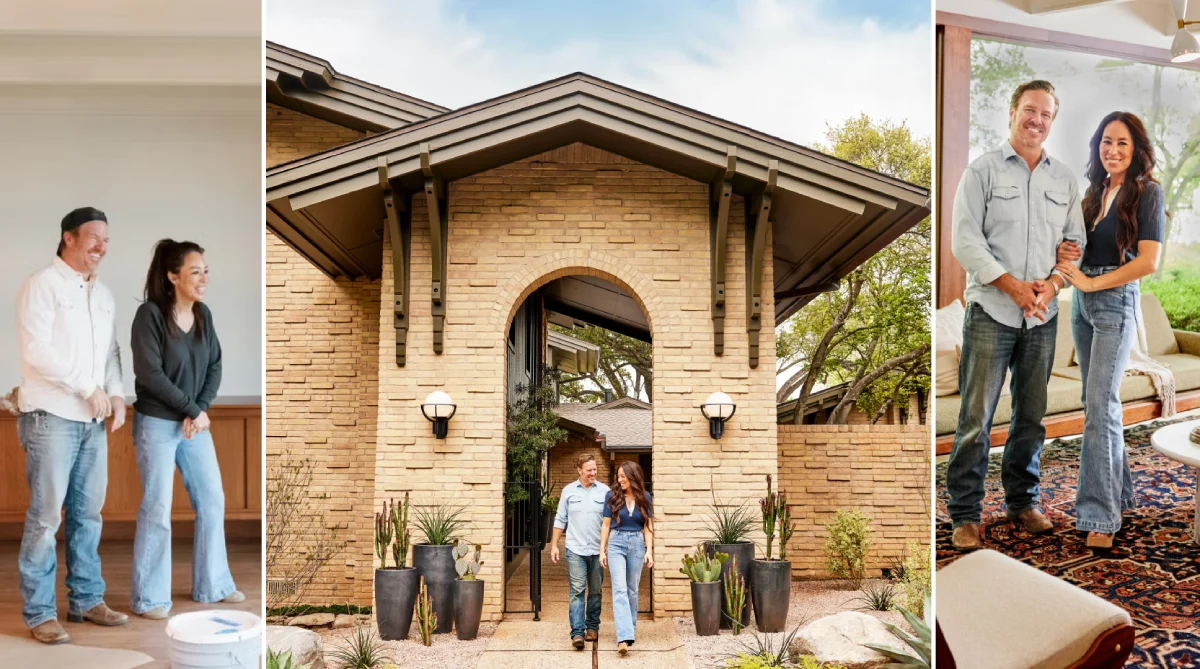
When Chip and Joanna Gaines decided to mark the 10th anniversary of Fixer Upper by taking on a cliffside lake house in Waco, Texas, they set themselves a specific challenge — restore a forgotten 1960s home without erasing its history. What they produced was one of the most layered, carefully considered renovations in the show’s entire run.
The six-episode series, Fixer Upper: The Lakehouse, premiered in June 2024 and is available to stream on Magnolia Network, Max, and Discovery+ (HGTV aired select episodes). It follows the full arc of the project: from demolition through design decisions to the final reveal of a 5,100-square-foot, five-bedroom, five-bathroom property perched above Lake Waco. This article covers every major design move Joanna made, the style principles behind them, and what the finished home actually looks like — room by room.
The House Itself: What Joanna Was Working With
The lake house was built in 1965. By the time Chip and Joanna took it on, it had been altered significantly over the decades. A back room that was originally a recreation space had been converted into a kitchen during the 1990s. Layers of paint obscured original details. The pool was neglected. Many of the home’s mid-century modern and Spanish Revival characteristics had been buried under later renovations.
Joanna worked from the original blueprints, using them as a guide to understand what the house was always meant to be. That decision shaped everything — rather than imposing a new aesthetic, she committed to retelling the home’s original story.
“The lake house project taught me so much, and I absolutely loved getting to retell the original story of this very loved home,” Joanna said.
Two Styles, One Coherent Home
Every room in the lake house reflects a deliberate fusion of two distinct design movements:
- Mid-century modern — furniture built for function, natural materials like wood and marble, clean lines, organic forms, and an emphasis on bringing the outdoors in through large windows. Popular from the late 1950s through the 1970s.
- Spanish Revival — arched architectural details, terracotta tile, plaster finishes, and a warm, earthy character. Historically associated with Spanish colonial architecture, but widely interpreted in American residential design.
These two styles don’t naturally overlap, which made Joanna’s task interesting. She resolved the tension by assigning each style to specific moments — terracotta and arched fireplaces carry the Spanish Revival influence, while cherry wood, sputnik light fixtures, and modular furniture read as mid-century modern. The result is a house that feels both historically grounded and genuinely liveable.
Exterior: The Green That Started Everything
The exterior color choice was not arbitrary. When the construction team stripped back an old layer of paint during demolition, they discovered the original trim had been green. Joanna used that discovery to anchor the whole palette.
She painted the exterior trim — and later, several interior spaces — in Wooded Acres, a woodsy brown-green from her Magnolia Home paint line. The original tan brick cladding was kept, and the existing copper gutters were left untouched. The patina on the copper blends naturally with the dark green trim and wood door, which Joanna noted would have looked wrong with new metal.
In the courtyard, the footprint of a former flower bed was converted into a water feature with a small koi pond. In the backyard, the pool was drained, refinished, and opened up with manicured landscaping that restored clear sightlines to the lake.
Entryway
The entryway sets the tone immediately. Large terrazzo floor tiles — white with brass inlay — cover the ground floor. Against them sits a completely custom floating staircase in cherry wood, with green fabric treads and architecturally detailed railings designed specifically to be the first thing a visitor notices.
Behind the staircase, a full-length, full-height wall of green tile creates a bold vertical backdrop. The entry bench nearby is upholstered in earth tones that echo the home’s broader palette. A woven runner rug in deep red and orange tones adds warmth without clashing. Wooden pocket doors and paneling on door frames tie into the cherry wood staircase and carry the material story into the rest of the house.
The Library: A Room With Serious Intention
Set behind reeded glass doors just off the entry, the library is one of Joanna’s most considered spaces in the entire project. The walls carry the same Wooded Acres green used on the exterior, which creates a connection between inside and outside that recurs throughout the home.
The back wall features a wooden gridded accent wall that stores books and plants, backed by textured wallpaper. Asymmetrical shelving on a second wall adds character without the formality of built-ins. Four mid-century modern leather armchairs create a seating area that works for reading alone or conversation in a group. A gold overhead light fixture complements the natural light, which floods in through windows overlooking the courtyard.
The library is visible through the floating staircase from the entryway, which adds a layered depth to the entry sequence.
Living Room: Windows as a Design Element
Joanna and Chip extended the original window opening in the living room by a full foot, effectively creating floor-to-ceiling glass with panoramic views of Lake Waco and the surrounding forest. The view became the dominant feature, and every other design choice serves it.
A deep green sofa anchors the seating area, paired with armchairs and an oblong marble coffee table. A rich antique rug grounds the arrangement. The fireplace, original to the house, was replastered and given built-in plaster shelves on either side — a move that preserved the arched character of the original structure while making it more functional. The ceiling was painted in Blanched, a warm beige from Joanna’s paint line, which makes the room feel taller and more open.
A cherry wood secretary desk in the corner adds a working surface without turning the room into an office. Every accessory in the room, down to a book titled The Twentieth Century on the coffee table, is period-appropriate.
Kitchen: Where Two Styles Meet Most Clearly
The kitchen is the room where the Spanish Revival and mid-century modern influences coexist most literally. The floor is terracotta tile with a marble star detail in the center of each tile — the terracotta nods to Spanish architecture, the marble star is distinctly mid-century.
Cherry wood cabinets run the length of a working wall, with a hidden walk-in pantry and ample storage behind them. The cabinetry on the opposite run is painted in Remote Trail, a deep forest green from the Lakehouse Collection. Marble countertops and a full marble backsplash create a sense of quiet refinement that runs against the earthy tones elsewhere, giving the kitchen its own character.
The island is powder-coated steel in the same green used throughout the home, with a double bullnose marble top edge. A custom fluted wood breakfast table, made specifically for this project, ties back to the cherry wood cabinetry. A recessed coffee nook provides a dedicated spot for small appliances. A glass door opens directly to the backyard and pool.
Joanna has called the kitchen one of her favorite spaces in the project.
Dining Room: Light as a Material
The dining room uses three deep skylights set into a slanted ceiling as its primary design feature. They pull natural light into what might otherwise feel like a transitional space between the kitchen and living areas. A gold pendant light fixture positioned above the table ensures the room remains warm and well-lit after sunset.
The furniture here reflects the home’s overall character — modern functionality with vintage proportions. A large indoor tree in the corner and a landscape print in a frame that echoes the home’s architectural detailing both extend the idea of bringing the natural environment indoors.
Powder Room
Joanna painted the powder room in the same deep green found throughout the home and added a yellow and white checkered tile that covers the backsplash down to the floor. It’s a deliberately playful choice in an otherwise serious color palette. A large sweeping mirror and sleek silver hardware make the small space feel larger without softening its character.
Primary Suite: Designed to Feel Like the Outdoors
The primary bedroom and bathroom sit on the second floor, positioned high enough to feel surrounded by the tree canopy. Joanna’s stated intention for this suite was to make the interior feel like a continuation of the exterior view.
The custom headboard is cherry wood with green velvet cushioning, flanked by matching cherry wood nightstands. An arched inset reading nook, lined in the same textured wallpaper used downstairs, creates a secondary purpose for the room. A sputnik-style ceiling fixture is the clearest mid-century modern reference in the space.
In the bathroom, the walls are finished in waterproof plaster. A powder-coated steel partition in the same green as the kitchen island encloses the shower and water closet. The double vanity has a marble countertop that extends beyond its base and cuts across a floor-to-ceiling exterior window — a bold structural decision that rewards closer inspection.
The Back Den: Restoration as Design
The back den is the room with the most direct historical restoration. Originally a recreation room, it had been converted into a kitchen in the 1990s. Joanna returned it to its original function.
Cherry wood wall paneling covers most of the room, with a corner radius detail that updates the look without abandoning the period reference. The floor uses pressed volcanic ash tile — a material that was popular in the 1960s — laid in an imperfect checkerboard pattern that gives the floor organic character. A retro freestanding fireplace with a cream-colored conical hood sits at the center. A built-in green upholstered sectional, another sputnik chandelier, and a record player accessorized with actual albums complete the room’s recreation-era personality.
Upstairs Landing
After the series aired, Joanna shared a space that didn’t appear in the televised reveal — the upstairs landing at the top of the staircase. It features a mid-century modern green sofa with built-in wooden side tables, a red and navy area rug, and a large black-and-white photograph of Lake Waco in a thin wood frame. A single black sconce provides lighting.
Joanna said this was one of her favorite spots in the house. It’s a small, overlooked space that was given the same level of thought as every primary room.
The Greenhouse
In the backyard, a greenhouse filled with succulents and warm-weather plants offers an indoor-outdoor transition space. The raftered ceiling inside is painted in Juniper Tree — a sun-washed green from the Lakehouse Collection — which maintains the chromatic continuity of the house while acknowledging the specific character of the space.
The Lakehouse Paint Collection
Joanna released a seven-color paint collection called the Lakehouse Collection through her Magnolia Home by Joanna Gaines line, available through KILZ. The colors were drawn directly from the renovation and are designed to work both independently and as a coordinated palette.
The seven colors are:
- Tranquil Waters — a neutral grey with a blue undertone
- Superior — a true deep blue
- Cognac — an earthy brown with reddish warmth
- Remote Trail — a grounding green with warm undertones, used on the kitchen cabinetry
- Juniper Tree — a warm, sun-washed green, used in the greenhouse
- Blanched — a warm beige, used on the living room raftered ceiling
- Wooded Acres — a woodsy brown-green used on the exterior trim and in the library
All seven sit within the broader catalog of 150 Magnolia Home paint colors available at KILZ/Magnolia/LakehouseCollection—where you can preview colors, order samples, and find local retailers.
Who Bought the Lake House?
About a month after the final reveal aired, Joanna confirmed the house sold to a family she described as ‘a perfect fit’—reportedly for $1.4 million, exceeding initial expectations.
“We’re excited to see them live out their story in this beautiful corner of Waco, nestled in the woods, overlooking beautiful Lake Waco,” she said.
What Makes This Project Different From Previous Fixer-Upper Work
Most Fixer Upper renovations involve a family choosing a property and Chip and Joanna redesigning it around their preferences. The Lake Waco project was different — it was a flip the Gaineses undertook themselves, on a house they selected, using the original blueprints as a design document rather than a starting point to deviate from.
That shift in ownership produced a different quality of decision-making. There was no client to satisfy — only Joanna’s own interpretation of what the house was meant to be. The result is a renovation where every choice connects back to a single clear idea: restore the original story of the house, then hand it off to someone who will write the next chapter.
That approach, more than any individual room or paint color, is what makes the lake house project worth studying closely.