
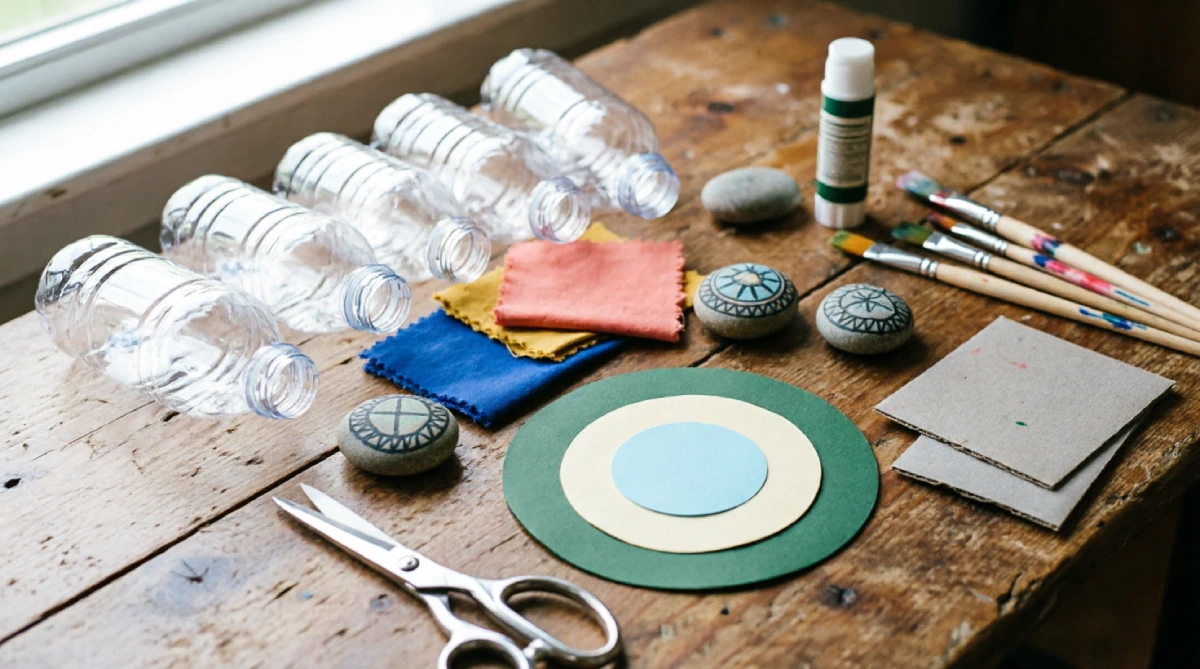
You’ve got empty bottles, old fabric scraps, and a stack of cardboard boxes collecting dust. You know you could do something with them — you just don’t know where to start. That’s exactly the gap Inventive LWMFCrafts is designed to fill.
This guide covers what the concept actually means, what “LWMF” refers to, and five specific project ideas with real steps you can follow today — no expensive tools, no prior experience required.
What Is Inventive LWMFCrafts?
At its core, Inventive LWMFCrafts is a DIY creativity concept built around one idea: you don’t need much to make something meaningful. The focus is on using materials you already have — paper, fabric scraps, plastic bottles, stones, cardboard — and turning them into items that are useful, decorative, or both.
What separates it from generic craft content is the emphasis on originality. There are no fixed templates you’re supposed to copy. The goal is to develop your own version of an idea, adjust it to your taste, and build creative confidence through doing — not watching.
The concept sits squarely in the broader DIY and upcycling movement, which has grown significantly as people look for affordable, screen-free activities that also produce something tangible.
What Does LWMF Actually Stand For?
This is the question none of the other articles about this topic bother to answer — probably because it’s not widely documented.
Based on the website structure at inventivelwmfcrafts.com, “LWMF” appears to function as a brand identifier rather than a standard acronym with a universally defined meaning. The site covers categories like home improvement and interior design alongside crafts, suggesting LWMF may relate to the platform’s founder or brand name rather than a specific craft methodology.
If you’re searching because you want to know whether this is a formal crafting technique or a certified methodology — it isn’t. It’s a content brand built around accessible DIY ideas. That’s useful to know because it means there’s no “right” way to do LWMFCrafts. The projects are the point, not the label.
5 Inventive LWMFCrafts Project Ideas (With Actual Steps)
These aren’t vague suggestions. Each one has a clear process you can follow from start to finish.
1. Paper Flower Wall Art
What you need: Colored paper or old magazines, scissors, glue, and a piece of cardboard or canvas.
Steps:
- Cut paper into circles of varying sizes (roughly 4–8 cm diameter)
- Fold each circle in half three times to form a petal shape
- Arrange 6–8 petals in a circular pattern and glue them onto the cardboard base
- Layer smaller petals on top of larger ones for depth
- Add a button or a small circle of contrasting paper as the center
- Repeat to create a cluster of 5–7 flowers across the panel
Time: 45–60 minutes. No special skills needed.
2. Plastic Bottle Planter
What you need: A clean 1.5L plastic bottle, a box cutter or sharp scissors, paint, soil, a small plant or seeds.
Steps:
- Cut the bottle horizontally about one-third from the top
- Punch 3–4 small holes in the bottom section for drainage
- Paint the outside of the bottom section in any color — acrylic paint works best
- Let it dry fully (20–30 minutes)
- Fill with soil and plant herbs, succulents, or small flowers
Practical tip most articles miss: Paint the bottle before cutting. It’s far easier to hold and paint a whole bottle than a cut section.
3. Fabric Scrap Tote Bag
What you need: Old t-shirts or fabric scraps, scissors, fabric glue or basic sewing thread, needle or sewing machine.
Steps:
- Cut two identical rectangles from fabric (approximately 35cm x 40cm each)
- Place them face-to-face and sew or glue three sides together, leaving the top open
- Cut two strips (each roughly 5cm x 50cm) from a contrasting fabric for handles
- Fold each strip lengthwise and sew along the edge to form a strap
- Attach handles to the inside top edge of the bag, 8–10cm from each side
No sewing machine? Fabric glue works for light-use bags. Add a second layer of glue on stress points like handle attachments.
4. Natural Stone Painting
What you need: Smooth flat stones (from a garden, riverbank, or craft store), acrylic paint, a thin brush, and clear varnish (optional).
Steps:
- Clean and dry the stones completely
- Apply a white base coat and let it dry
- Paint your design — geometric patterns, animals, or abstract shapes work well
- Use a fine-tip marker for details once the paint dries
- Seal with clear varnish to protect the design
Use case: These work well as garden markers, paperweights, or decorative pieces. Paint a herb name on each stone and place them in your bottle planters from Project 2.
5. Cardboard Photo Frame
What you need: A cereal box or similar cardboard, scissors, ruler, craft glue, and decorative materials (paint, buttons, dried flowers, washi tape).
Steps:
- Cut two identical rectangles (e.g., 20cm x 25cm)
- In one piece, cut a rectangular window 2cm from each edge — this is your front frame
- Decorate the front frame as you like
- Glue the decorated front piece onto the plain back piece along three sides, leaving the top open
- Slide your photo in through the top
Common mistake: People cut the window opening too large and lose the frame effect. Leave at least 2cm on all sides.
Beginner Mistakes That Kill Momentum
Most beginners don’t fail because they lack talent. They fail because of avoidable process errors.
- Starting with too many materials at once. Pick one project. Gather only what that project needs. Buying a full supply kit before doing your first project is how craft supplies end up in a drawer forever.
- Expecting professional results on the first try. Your first paper flower will look rough. That’s correct. The second one will look better. Treating the first attempt as a test run, not a finished product, changes how you approach the whole process.
- Skipping prep steps. Specifically — not cleaning surfaces before painting, not letting layers dry fully before adding the next, and not measuring before cutting. These shortcuts are why projects fall apart or look uneven.
- Copying too closely. LWMFCrafts specifically pushes originality. If you’re trying to replicate someone else’s project exactly, you’ll spend more time frustrated at the differences than enjoying the process. Use ideas as a starting point, then adjust.
Quick-Start Checklist
Before your first session, confirm you have:
- [ ] One specific project chosen (not three “maybe” options)
- [ ] All materials for that project gathered in one place
- [ ] A clean, flat work surface
- [ ] 45–90 minutes of uninterrupted time
- [ ] Realistic expectations — the goal is completion, not perfection
That’s it. You don’t need a craft room, a YouTube channel, or a Pinterest board full of inspiration. You need one project and the materials to start it.
FAQs
What materials do I need for LWMFCrafts?
Most projects use items already in the home: paper, cardboard, plastic bottles, old fabric, paint, scissors, and glue. You don’t need a starter kit. Start with one project and gather only what that specific project requires.
Are LWMFCrafts suitable for kids?
Yes, with appropriate supervision. Projects like stone painting and paper flowers work well for children aged 6 and up. Anything involving box cutters or sharp scissors should be handled by adults.
How long does a typical beginner project take?
Most of the projects above take between 45 and 90 minutes for a first attempt. Time drops significantly on repeat projects once you’re familiar with the steps.
Can LWMFCrafts be turned into a business?
Realistically, yes — but start with the craft, not the business plan. Handmade home decor, personalized gifts, and upcycled accessories all have marketplaces (Etsy being the most accessible). Establish a consistent style first, then consider selling. Trying to monetize before you have a repeatable product usually ends the hobby before it starts.
Final Word
Inventive LWMFCrafts isn’t a formal discipline or a certified method. It’s a practical creative framework built around one honest premise: most people already have what they need to make something, they just need a clear starting point.
The five projects above give you that starting point. Pick one, gather the materials, and spend an hour with it. That’s the full barrier to entry.