
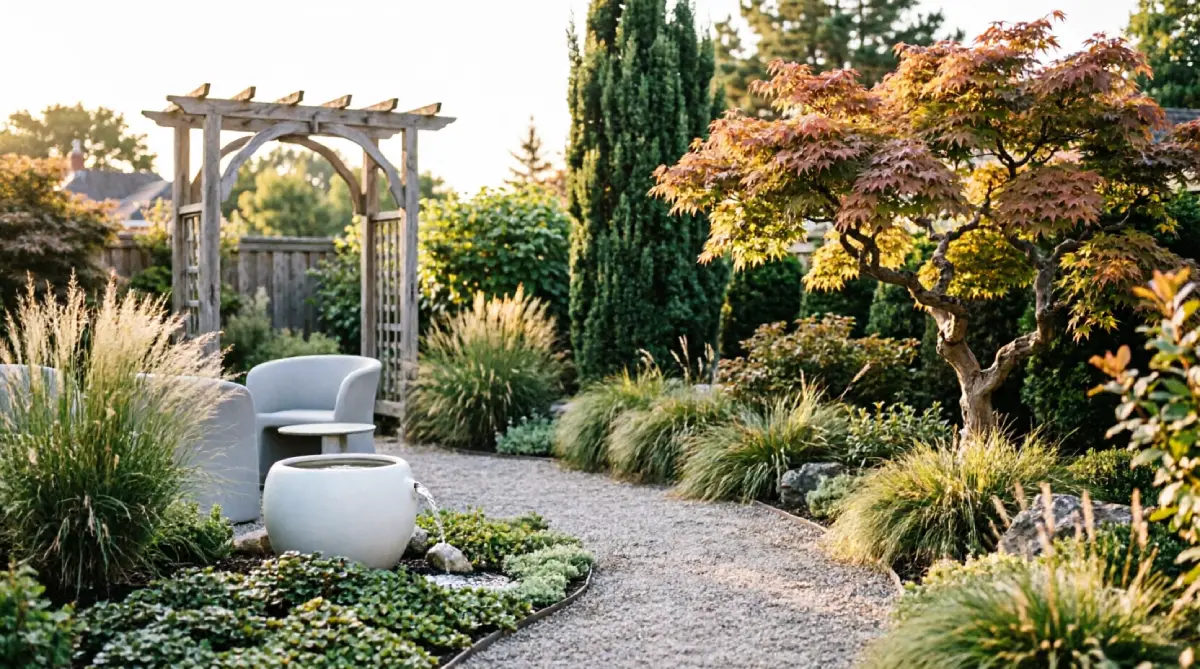
A neighbor once asked why my backyard felt so different from the houses on either side of mine. Same size lot. Same soil. Same climate. The difference wasn’t money or land — it was a set of deliberate decisions made before a single plant went in the ground.
That’s exactly what the garden guide homenumental approach is about. Not spending more. Not having more space. Making better choices, in the right order, with a clear picture of what you’re building toward.
This guide walks through those choices step by step — from site assessment to plant selection to hardscaping — so your yard stops looking like a collection of things you bought and starts looking like something you designed.
What “Monumental” Actually Means (and Why Size Doesn’t Matter)
The word gets thrown around without much explanation. People hear “monumental” and picture sweeping estate gardens with staff and stone fountains.
That’s not it.
A monumental garden is one where every element — plant, path, structure — feels like it belongs there on purpose. It has weight. It has direction. Your eye knows where to go and what to feel when it gets there.
The key ingredients are scale, proportion, repetition, and one strong focal point. None of those requires acreage. A single oversized ceramic planter with a bold specimen plant can make a 12-foot patio feel like a designed space. A pathway that leads somewhere intentional — not just to the back fence — creates a sense of destination even in a compact yard.
The moment you stop buying plants that look pretty and start placing elements that create an experience, you’re working with this method.
Step 1 — Assess Before You Buy (The Step Most People Skip)
Most failed gardens share one root cause: someone went to the nursery before they understood their space.
You end up with sun-loving plants in shade, moisture-lovers in fast-draining gravel, and combinations that fight each other instead of building something cohesive. The fix is simple — spend one week observing your yard before spending a cent.
Sunlight Mapping
Walk your outdoor space at three different times: early morning, midday, and late afternoon. Note which areas receive direct sun for six or more hours (full sun), three to six hours (partial shade), and less than three hours (full shade). Draw a rough map.
This single exercise will eliminate at least half the bad plant choices you would have otherwise made.
Soil and Drainage
Grab a handful of moist soil and squeeze it. If it holds a tight ball and smears, you have clay — it drains poorly and compacts. If it falls apart and feels gritty, it’s sandy — it drains too fast and holds little nutrition. Loose, crumbly soil that holds shape lightly is loam — what most plants want.
Also, check where water pools after heavy rain. Those low spots need either drainage work or moisture-tolerant plants. Ignoring them means watching plants rot in the ground after the first wet season.
Step 2 — Plan on Paper Before You Plant
Planning doesn’t kill creativity. It stops you from making expensive mistakes with living things.
You don’t need software or professional drawings. A rough sketch on paper — showing where structures are, where the sun hits, where you want people to walk and sit — is enough to make far better decisions.
Define a Theme
Pick one design direction and hold to it. Formal and symmetrical. Cottage and naturalistic. Modern and minimal. Each has different plant choices, path styles, and hardscaping that suit it. Mixing styles without intention just produces clutter.
Think in Zones and Sightlines
The best gardens don’t reveal everything at once. They guide you through the space.
Divide your yard into zones — a seating area, a planting border, a path, a focal point destination. Then ask yourself: from my back door, what do I see first? From the seating area, what do I look toward? Designing with sightlines means people always have something to look at, something to move toward.
A garden that shows you everything from one spot has no depth. Depth is what makes small spaces feel grand.
Step 3 — Choose Plants That Build Structure, Not Just Color
Flowers are seasonal. They bloom for a few weeks, then you’re left looking at stems and leaves for the rest of the year. A monumental garden is built on plants that look intentional in every month — not just May.
Architectural Plants
These are plants chosen for their form, not primarily their flowers. They create the skeleton of your garden.
Examples: Italian Cypress for strong vertical lines. Yucca for bold spiky texture in dry spots. Ornamental grasses that move in the wind and provide winter interest. Large-leaf hostas that create actual visual mass in shaded areas. Japanese maples that earn their space in every season — spring color, summer shade, autumn fire, winter structure.
Start by placing three to five architectural plants. These come first. Everything else fills in around them.
The Mass Planting Method
One lavender plant is nice. Twenty lavender plants planted together in a sweep is a statement.
This is the principle most DIY gardeners ignore. They buy one of everything — one salvia, one echinacea, one ornamental grass — and the result looks like a plant collection, not a designed garden.
Repetition tells people this was intentional. Choose three to four plant varieties that work well in your conditions, then buy multiples of each and plant them in drifts or groups. The per-plant cost drops, the impact multiplies, and the space reads as designed rather than assembled.
Step 4 — Hardscaping: The Bones That Hold It Together
Plants change with the seasons. Paths, structures, and surfaces stay. Hardscaping is what makes your garden look coherent in December, not just in July.
Pathways
Pathways should be wider than you think. A two-foot path feels cramped and accidental. A four to five-foot path says this was planned. Materials matter too: gravel is affordable (roughly $50 per cubic yard) and gives a relaxed, naturalistic feel; stone pavers are more formal and durable; brick adds warmth and pairs well with traditional architecture. Whatever you choose, make sure the path leads to something worth reaching — a bench, a plant grouping, a view.
A focal point structure
A focal point structure transforms dead space into a destination. A cedar pergola over a seating corner, a simple wooden arbor at a garden entrance, a wall-mounted water feature — these anchor the design and give visitors something to move toward. The structure doesn’t have to be expensive. A well-built $300 arbor does more for a garden’s sense of intentionality than $1,000 worth of random plants.
Water features
Water features are less complicated than people assume. A glazed ceramic bowl (around 24 inches wide) with a small submersible pump costs $200–$300 and delivers that constant low sound that pulls a whole space together. Place it near your seating area. You hear it there, not from the far end of the yard.
Achieving the Look on a Realistic Budget
You don’t need to spend everything at once, and you don’t need to spend a lot to create a serious impact. The trick is knowing which things to invest in early and which to build over time.
| Element | Typical Cost | Visual Impact | Timeline |
|---|---|---|---|
| One hero focal piece (mature tree, sculpture, fountain) | $200–$600 | Very high | Immediate |
| Architectural plants (3–5 varieties × multiples) | $15–$40 each | High | 1–2 seasons |
| Pathway (gravel or stepping stones) | $100–$300 | High | Weekend project |
| Pergola or arbor (DIY materials) | $400–$900 | Very high | 1–2 weekends |
| Edge cleaning and mulching | $50–$100 | Medium-high | Afternoon |
The consistent mistake is spreading a $500 budget across 25 different plants instead of investing it in one or two things with real presence. One mature Japanese maple plus clean edging and a gravel path looks more expensive than a dozen mixed annuals scattered across a bed.
Buy young plants where you can wait. A one-gallon and a three-gallon version of the same shrub often look identical within two growing seasons, but the price difference is significant.
Three Mistakes That Kill Monumental Garden Designs
- 1. Planting before assessing. Choosing plants based on what looks good at the nursery, without understanding your soil, drainage, and light conditions first. The result is plants that struggle, die, or thrive in the wrong places and throw off the whole balance.
- 2. Treating every plant as equally important. In a designed garden, some plants are structural anchors, some are supporting cast, and some are seasonal fillers. Most DIY gardeners treat everything the same — same sized pots, same spacing, same visual weight. The result looks flat. Decide which plants lead and which ones support.
- 3. Trying to show everything at once. A garden that’s entirely visible from one vantage point has no mystery, no depth, no reason to walk through it. Use plant groupings, hedges, or a change in path direction to create a sense that there’s more to discover. Even in a small yard, partial concealment makes the space feel significantly larger.
FAQs
What is the garden guide homenumental?
The garden guide homenumental refers to a design-focused gardening approach originally published by homenumental.com.co. It applies principles of architectural scale, focal points, and intentional plant placement to create outdoor spaces that feel grand regardless of size. The core idea is that deliberate design choices matter far more than budget or plot size.
Can a small yard look monumental?
Yes — and this is the central argument of the approach. A small yard with one strong focal point, a clear sightline, and mass-planted structural plants will look more intentional and impressive than a large yard filled with random purchases. Scale is about proportion and visual weight, not square footage.
What plants work best for a monumental garden design?
Plants with strong architectural form are most effective — Italian Cypress, ornamental grasses, yucca, Japanese maple, large-leaf hostas, and climbing plants on structures like trellises or pergolas. The goal is to choose plants with presence in multiple seasons, not just summer bloomers.
How much does it cost to create a monumental garden?
A realistic starting budget is $500–$1,000 for meaningful impact. Spend it on one strong focal piece, a simple path or edging, and multiples of two or three structural plants. Avoid spreading a small budget across many different plant species — concentrated investment in fewer elements produces far better results.
Final Thought
The most common reason outdoor spaces never get built properly is also the simplest: people treat their garden as an ongoing shopping list instead of a design project with a sequence.
Assess your space first. Plan on paper. Choose structure before color. Invest in hardscaping early. Then fill in the living layers with patience.
The garden guide homenumental method works because it respects that sequence. Follow it, and your yard stops being a collection of plants and starts being something people actually notice.