
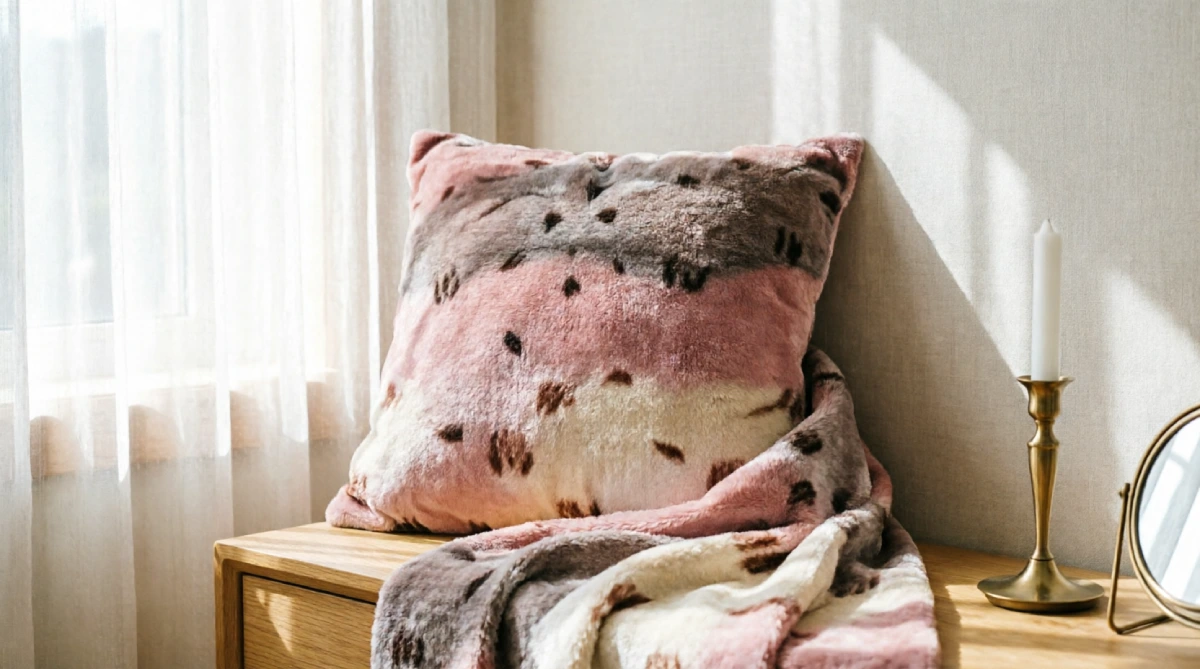
There’s a specific kind of warmth that certain interiors have — the kind that makes you slow down the moment you walk in. If you’ve recently come across the decoration pink chinchilla pattern TW2GTE and found yourself curious about what it actually is, why it’s gained so much traction, and whether it belongs in your home, this guide covers all of it clearly and without the usual fluff.
What Is the Decoration Pink Chinchilla Pattern TW2GTE?
At its core, this is a soft, texture-inspired decorative pattern that draws from the visual quality of chinchilla fur — one of the most recognizable materials in luxury design, known for its dense, layered, almost cloudlike softness. The pattern doesn’t use actual fur. Instead, designers translated that sensory quality — the subtle depth, the gentle shimmer, the muted warmth — into a repeatable motif that works across textiles, wallpapers, upholstery, and surface accessories.
The color palette sits firmly in the soft-pink family: blush, dusty rose, pale mauve, and warm ivory-rose tones. These aren’t bright or saturated pinks. They’re the kind of pinks that read more like a mood than a color — quiet, warm, and layered.
The TW2GTE designation is a design classification tag. It identifies a specific structural version of this pattern, distinguishing it by its texture weight gradient equation — essentially the formula that controls how the pattern’s dimensional depth scales across different surface sizes. This is what makes the TW2GTE variant behave consistently whether it appears on a throw pillow, a wall panel, or a wide-format rug. The code also helps manufacturers and designers reproduce the pattern reliably across production runs, which matters when you’re trying to coordinate multiple pieces in the same room.
Why This Pattern Has Real Staying Power
Most trend-driven patterns burn out quickly because they’re loud. The pink chinchilla pattern TW2GTE holds up over time for the opposite reason: it’s subtle by design.
From a color psychology standpoint, the muted pinks in this pattern sit in a range that activates calm rather than stimulation. Unlike saturated reds or electric teals, soft blush tones tend to reduce visual tension in a space. This is why the pattern has found a home far beyond nurseries — it works equally well in adult bedrooms, reading rooms, and home offices where mental quiet matters.
The texture element adds another layer. Even on flat surfaces like printed wallpaper or woven fabric, the chinchilla-inspired pattern creates the visual impression of depth. Your eye reads the pattern as soft before your hand ever touches it. This psychological shortcut — where the brain anticipates comfort from visual cues alone — is what makes the pattern feel emotionally generous in a way that purely flat or graphic patterns can’t replicate.
The TW2GTE version specifically improves on earlier chinchilla-inspired motifs by using gradient layering that looks convincing up close, not just from a distance. Previous iterations of the style could look artificial when examined at arm’s length. This version resolves that.
Where It Works Best: Room-by-Room Thinking
1. Bedrooms
This is the most natural environment for the pattern. The combination of soft pink tones and texture-suggestive depth creates a restful visual atmosphere that supports winding down. The most effective applications here are accent pieces: a textured throw across the foot of the bed, cushions against a neutral headboard, or a rug that anchors the space without competing with other elements. An accent wall in a wallpaper version of the TW2GTE pattern can also work well if the rest of the room stays understated — clean-lined furniture, white or cream bedding, minimal objects.
2. Living Rooms
The key in a living room is proportion. The pattern thrives as an accent, not a dominant presence. Think of it as the detail that makes a thoughtfully designed room feel finished rather than sparse. Two or three cushions on a neutral sofa, a small decorative pouch or stool covered in the pattern, or a textured area rug are all ways to introduce it without tipping the room into visual noise. Avoid applying it to large upholstered pieces unless the rest of the room is very quiet.
3. Home Offices and Creative Workspaces
This is where competitors consistently miss an opportunity. The stress-reducing quality of soft pink and the subtle visual interest of the chinchilla texture both work in favor of spaces where you spend hours at a desk. A harsh, sterile workspace can increase fatigue; one that has some warmth and softness tends to feel more sustainable over time. A desk mat, a single cushion on the chair, or a small framed print using the pattern can shift the atmosphere without distracting from work.
4. Children’s Rooms and Nurseries
The pattern works here, but it doesn’t have to stop here. Confining it to kids’ spaces undersells it. When used in adult rooms, the right color pairings remove any juvenile association entirely.
How to Style It Without Overdoing It
Most decoration mistakes with this pattern come from applying too much of it in one space. The pattern is designed to be felt, not announced.
A reliable formula: let neutral tones — warm white, cream, light greige, or soft linen — carry 60% of the room. Allow the pink family to occupy roughly 30%, mostly in solid form (cushions, curtains, paint on one wall). Reserve the TW2GTE pattern itself for 10% of the visual space, used as a signature accent in two or three deliberate spots. That ratio lets the pattern do what it does best: add warmth and texture without exhausting the eye.
Color pairings that work:
- Warm whites and ivory — the cleanest base, lets the pink stand out naturally
- Brushed brass or warm gold metal accents — adds sophistication and keeps the palette from reading as overly sweet
- Soft navy or slate blue — creates contrast without aggression; makes the pink feel more mature
- Smoky grey — grounds the pattern and removes any nursery association
- Natural materials like rattan, light wood, or linen — adds organic warmth and balances the softness with some earthiness
What to avoid: pairing the pattern with other strong prints, especially high-contrast ones. The TW2GTE pattern needs breathing room. If your room already has bold stripes, graphic geometric shapes, or saturated colors, introduce this pattern last and in very small doses.
Practical Considerations Before You Buy
The lighter tones in this pattern are honest about one thing: they show wear. Dust and stains are more visible on blush and ivory surfaces than on mid-toned or dark fabrics. This isn’t a reason to avoid the pattern, but it is a reason to be deliberate about where you place it.
For high-traffic areas or rooms used by children or pets, prioritize performance-grade fabrics that use the pattern — treated upholstery, washable covers, or stain-resistant rugs. For lower-traffic spaces like a bedroom or reading corner, standard fabric quality is fine.
When shopping, look for pieces where the pattern has structural depth — where the texture is either woven into the material or printed with gradient shading that creates a dimensional effect. Flat or overly uniform versions of the pattern lose the quality that makes it distinctive.
The Market Gap Most Guides Ignore
Nearly every article about this pattern defaults to the same recommendation: nurseries, teenage bedrooms, or “fun spaces.” That framing leaves out a wide range of homeowners who want sophisticated interiors that still feel warm and personal.
When the pink chinchilla pattern TW2GTE is paired with adult-oriented materials — matte ceramics, brushed metals, thick linen, dark wood furniture — it sheds the “cute” label entirely. High-end interior projects in boutique hotels and upscale lounges have been using similar soft-texture pastel aesthetics for several years now. The version available to residential consumers follows the same logic. The pattern can absolutely exist in a polished, grown-up space. The pairing is what determines the register, not the pattern itself.
Mistakes Worth Avoiding
- Using it everywhere. The more surface area this pattern covers, the less effective it becomes. Restraint is the design principle here.
- Ignoring room lighting. Soft pink patterns shift noticeably under different light temperatures. Warm bulbs (2700–3000K) deepen the tone and enhance the cozy effect. Cool white bulbs can flatten the pattern and make it look washed out. Test swatches under your actual room lighting before committing.
- Buying cheap versions. Budget versions of the pattern often use oversimplified printing without the gradient depth that gives the TW2GTE its characteristic quality. If the pattern looks too uniform or one-dimensional in product photos, it will read the same way in the room.
- Matching too precisely. Trying to coordinate every pink-toned item to the same shade often produces a flat, monochromatic result. Slight tonal variation between pieces — one item in blush, another in dusty rose, another in pale mauve — adds depth and prevents the room from looking staged.
Conclusion
The decoration pink chinchilla pattern TW2GTE works because it solves something real: it brings warmth, texture, and sensory softness to spaces that would otherwise feel cold or generic. When used with restraint and paired thoughtfully, it reads as sophisticated rather than sentimental.
The TW2GTE classification isn’t just a product code — it represents a specific design standard that delivers consistent quality across applications. Understanding that distinction helps you make smarter choices when selecting pieces, because not every “pink chinchilla” product delivers the same result.
Use it as an accent. Let neutrals carry the room. Choose your pairings with intention. And resist the urge to apply it everywhere — because the magic of this pattern is in the suggestion of softness, not the saturation of it.